

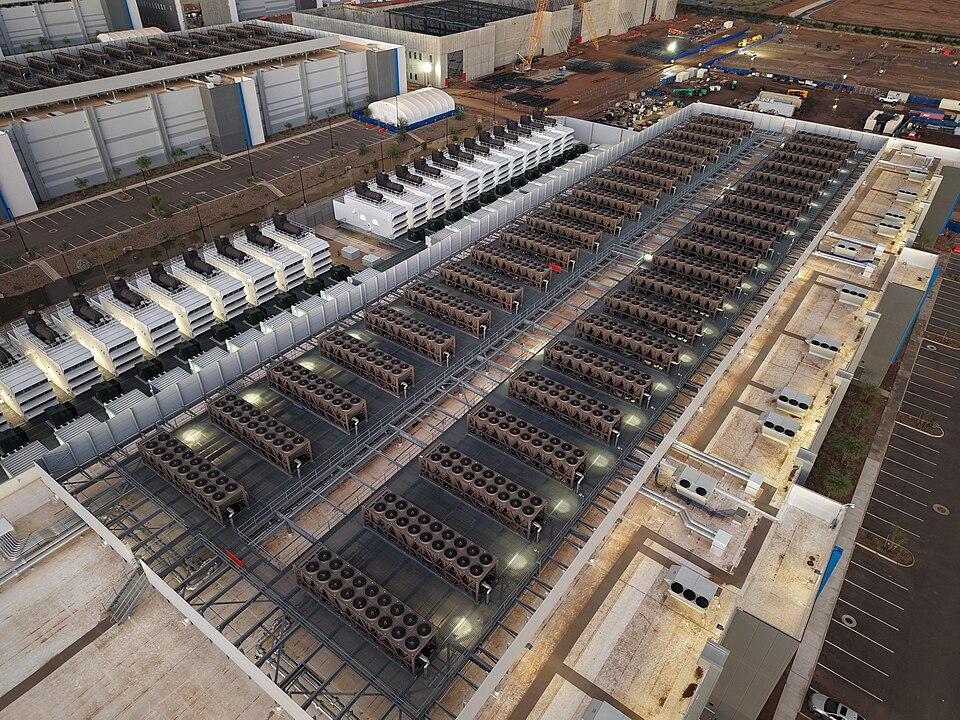
Rapid growth in artificial intelligence infrastructure is triggering opposition to data center construction worldwide, as communities raise concerns about electricity consumption, water shortages and environmental damage. The backlash is particularly prominent in the United States ahead of the November 3, 2026, midterm elections, with lawmakers from both major political parties questioning further expansion.
According to Data Center Map, nearly 13,000 data centers are listed worldwide, including more than 5,000 in the United States. The industry has expanded considerably from approximately 8,000 operational facilities recorded globally in 2021.
AI Infrastructure Expands Across Major Markets
The United States leads global data center capacity with approximately 53.73 gigawatts, followed by China at 31.90 gigawatts and the European Union at 11.92 gigawatts. Technology companies are also developing much larger facilities to support the computing requirements of advanced AI models.
Major projects include SpaceXAI’s Colossus complex, OpenAI-backed Stargate in Texas and Meta’s proposed Hyperion development in Louisiana. The Hyperion site is expected to occupy approximately 11 square kilometers, comparable to London’s Heathrow Airport.
Colossus 2 will house hundreds of thousands of Nvidia AI chips used to train the Grok chatbot. Its proposed energy infrastructure includes 41 methane-powered turbines, which environmental groups warn could increase local air pollution, although regulators maintain the equipment will meet air quality standards.
Electricity and Water Consumption Drive Public Opposition
Data centers consumed an estimated 415 terawatt-hours of electricity in 2024, according to the International Energy Agency. The agency projects demand could more than double to approximately 945 terawatt-hours by 2030.
Beyond electricity consumption, communities have raised concerns about cooling-related water use, operating noise, higher energy prices and the conversion of agricultural or undeveloped land. Opposition has emerged across the United States, Mexico, France, Indonesia and the United Kingdom.
At least 16 US states have proposed legislation that would temporarily restrict or prohibit additional data center development. President Donald Trump has criticized opposition to the projects, while politicians from both major parties have supported measures addressing local environmental and infrastructure concerns.
Economic Benefits Vary by Data Center Type
A Brookings Institution study found that data centers generate local employment, although fewer permanent positions than some industry estimates suggest. Researchers estimated approximately 100 to 200 jobs per typical county receiving a major facility, with limited effects on wages.
The study found that hyperscale facilities operated by companies such as Amazon and Microsoft produce greater employment benefits than colocation facilities that rent computing space to external customers. It also identified modest increases in local housing prices following major developments.
Meanwhile, Goldman Sachs estimates annual AI infrastructure investment could reach $765 billion in 2026. Technology companies are also investigating space-based data centers and greater on-device AI processing as alternative approaches to expanding computing capacity.
Featured image credits: Wikimedia Commons
For more stories like it, click the +Follow button at the top of this page to follow us.